When it comes to motorcycle gear in the UK, there’s a big difference between what’s legally required and what’s simply recommended for safety. From helmets and visors to jackets, gloves, and boots, this blog breaks down the key rules every rider should know before hitting the road.
What Motorcycle Gear is Required vs What Gear is Recommended | Quick Answer
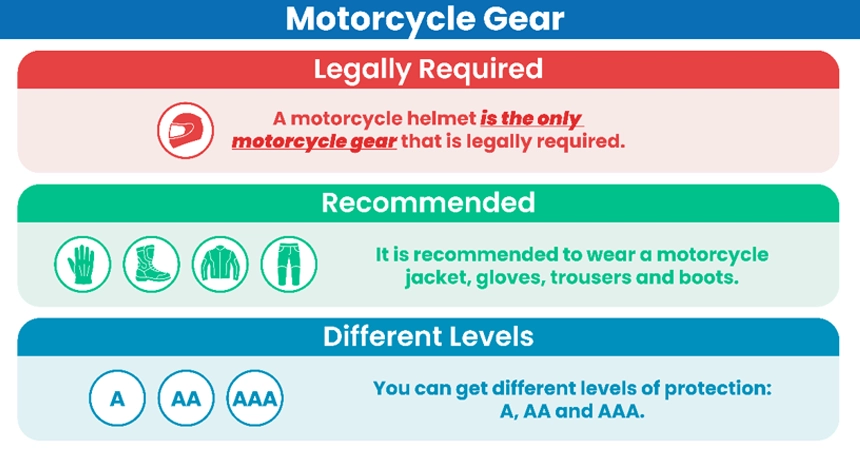
Surprisingly, a motorcycle helmet is the only motorcycle gear that is legally required; however, it is recommended, and you will probably notice that most UK riders also wear a motorcycle jacket, gloves, trousers, and boots. It’s also useful to know that you can get different levels of protection with each of these clothing items: A, AA, and AAA.
What Gear Do you Legally Need to Ride a Motorbike in the UK | UK Law & Motorcycle Gear
As said above, a motorcycle helmet is the only gear legally required to ride a motorbike in the UK.
What does the current UK Legislation state regarding motorcycle gear?
The UK legislation only mandates that riders and passengers wear a helmet that meets authorised safety standards.
Circumstances where you don’t have to wear a helmet
Some circumstances where you wouldn’t need to legally wear a helmet would be if you are:
- A sidecar passenger
- Pushing a motorbike on foot
- On private land
- Riding a quad bike (although in Northern Ireland, helmets are required on quad bikes)
- A sikh wearing a turban for religious reasons
Caught Riding without the Correct Gear | Fines & Other Implications
In the UK, if you are caught riding a motorcycle without a helmet, you could face penalties. Another thing to note is that while wearing protective gear, such as a jacket and trousers, is not mandatory, in the event of a personal injury claim, the absence of appropriate riding gear may mean the insurer could use contributory negligence to lessen the payout amount. What this means is that your actions, or lack thereof, have enhanced the extent of your injuries.
What safety standards must your gear meet? | UK Law & Motorcycle Gear

When buying motorcycle gear, it’s easy to get distracted by colours, brands, or what is trending on socials that week. But the bit that actually matters is the safety certification.
In the UK, motorcycle helmets and protective clothing need to meet specific safety standards before they can legally be sold as “protective” gear. Those labels and ratings tell you how much testing the gear has gone through, and how much protection it should offer in a crash.
Here’s what all of it actually means without the confusing jargon.
What are CE Labels? | CE Labels Explained
CE labels on motorcycle clothing indicate that it's been tested and approved to meet safety standards. Usually, they will have the CE label stitched inside the garment somewhere, and as I touched on above, it will have an A, AA or AAA rating beside it.
Protective armour levels:
- Class A: Basic road protection, lighter and more comfortable for urban riding at slower speeds.
- Class AA: Stronger balance between comfort and protection for everyday riding, more suitable for touring.
- Class AAA: Highest level of protection, often found in race or high-speed riding.
What does ECE 22.06-approved mean?
ECE 22.06 is the latest European helmet safety standard and is now considered the benchmark for modern motorcycle helmets in the UK. Compared to the older 22.05 standard, ECE 22.06 is stricter, so they have been tested against more realistic crash scenarios instead of a lab test. These include things such as:
- Multiple impact points
- Different impact speeds
- Rotational forces
- Visor durability
- Accessory compatibility
Is ECE 22.06 Better than Dot?
In short, yes. DOT is the American motorcycle helmet safety standard, and while it’s still legal and widely used in the US, ECE 22.06 is generally considered the stricter and more advanced certification.
What motorcycle gear is recommended | A Real Biker's Insight

You might be torn when knowing what the best recommended biker gear is, people all have different preferences, so we thought we would give you our insight.
Why should you wear full motorcycle gear?
It's advised that you wear full motorcycle gear because you want to be fully protected at all costs. Helmets protect your head, jackets and trousers reduce abrasion injuries, while gloves and boots protect vulnerable areas like your hands, ankles and feet.
Motorcycle Journalist Recommends: Best Motorcycle Gear
Most experienced riders recommend:
- ECE 22.06 - approved helmet
- CE-rated jacket and trousers
- Level 1 or Level 2 armour
- Motorcycle gloves
- Protective riding boots
The best motorcycle gear is comfortable, properly fitted and meets recognised safety standards.
The Importance of Making Sure Your Motorcycle Gear Fits

Even the best motorcycle gear won’t protect you properly if it doesn’t fit correctly. Gear that’s too loose can move during a crash, while gear that’s too tight can become uncomfortable and restrict movement when riding.
A good fit should feel secure without limiting your ability to move, brake or control the bike comfortably.
How to tell if your motorcycle gear fits correctly
Your motorcycle gear should feel snug but comfortable. Jackets and trousers shouldn’t flap excessively in the wind, and armour should stay in place around your shoulders, elbows, hips and knees.
Helmets should fit firmly around your head without painful pressure points or moving up, down or sideways when pulling on it.
Boots and gloves should also feel secure without cutting off circulation or restricting movement.
Remember the 2-2-2 Rules
A simple way to check your motorcycle helmet fit is the 2-2-2 rule:
- 2 fingers between your eyebrows and the front of the helmet
- 2 fingers between the chin strap and your chin
- 2 finger widths before the helmet excessively moves when shaken
If the helmet moves too much or feels loose, it's probably the wrong size.
Where should you buy your motorcycle gear from?

Where you buy your motorcycle gear matters almost as much as the gear itself. Buying from trusted retailers helps make sure you’re getting genuine, safety-certified equipment that fits properly and offers the protection it claims to.
Buying motorbike gear from dealerships or manufacturers directly
Buying directly from motorcycle dealerships or official manufacturers is usually the safest option. You’re more likely to get genuine CE-certified gear, expert sizing advice and proper warranty support if anything goes wrong.
Pros:
- Genuine certified products
- Professional fitting advice
- Manufacturer warranties
- Latest safety standards
Cons:
- Usually more expensive
- Smaller discounts compared to online marketplaces

The implications of buying gear second-hand
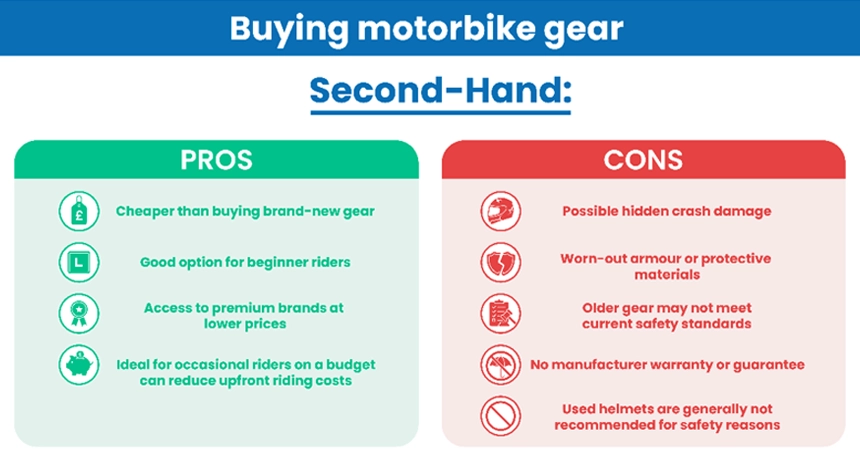
Buying second-hand motorcycle gear can be a cheaper way to get started, especially for new riders, but it does come with a few risks. Damage, wear and ageing materials aren’t always visible, which means older gear may not protect you properly in a crash.
Pros:
- Cheaper than buying brand near gear
- Good option for beginner riders
- Access to premium brands at lower prices
- Ideal for occasional riders on a budget. Can reduce upfront riding costs.
Cons:
- Possible hidden crash damage
- Worn-out armour or protective materials
- Older gear may not meet current safety standards
- No manufacturer warranty or guarantee
- Used helmets are generally not recommended for safety reasons
Why does Motorcycle Gear Matter? | Four Things Riders MUST Know!
It’s easy to see why motorcycle gear matters; every rider wants protection throughout every stage of a ride. But beyond the obvious, there are important facts and statistics that many riders overlook. Here are four key things every rider should know when understanding why motorcycle gear really makes a difference.
Improves rider safety
Statistics suggest that wearing certified gear reduces the risk of hospitalisation. Reducing 43% of soft tissue injuries and 63% of deep wounds during motorcycle accidents.
- Helmets: reduce the risk of head injury by 69% to 72% and decrease the overall risk of crash fatalities by roughly 42%.
- Motorcycle jacket fitted with body armour: Reduces the risk of upper body injury by 23% compared to wearing non-motorcycle jackets.
- Trousers: Reduce the risk of lower body injuries to the limbs by 43% and extensive deep injuries by 63%.
- Motorcycle gloves and boots: Reduce the risk of hand injuries by 55%, leg injuries by 61% and foot injuries by 55%.
Legal consequences of not wearing motorcycle gear
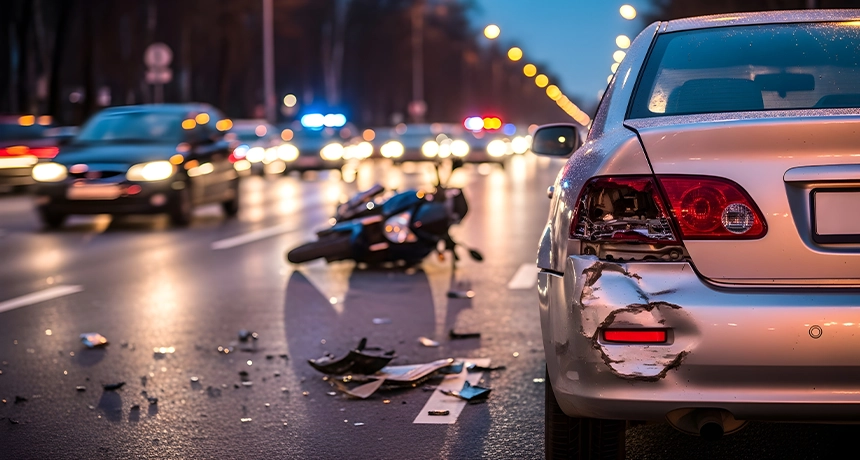
As you’d imagine, riding without legally required motorcycle gear has legal implications. Especially if an accident occurs:
- Ability to claim: If you are not wearing legally required motorcycle gear (helmet) in the event of an accident resulting in a claim, this will affect your claim and it could even be rejected.
- Contributory Negligence: A legal principle that can then reduce the compensation you receive if you are found partly at fault for your injuries.
- Liability issues: Riding without proper gear could impact your liability if the helmet doesn’t provide clear visibility.
Financial implications of non-compliance
As well as legal consequences there are also financial implications, such as fines up to £500 and this can also affect personal injury payouts due to contributory negligence.
Impact on Insurance
Not wearing proper motorcycle safety gear can significantly affect insurance and personal injury claims. Insurers may reduce compensation through contributory negligence if injuries are made worse by a lack of protective clothing.
If a rider has previously been caught riding without a helmet, they may have received a criminal conviction. This must be declared to insurers and could affect the cost and availability of future insurance until the conviction becomes spent.
Most Common Motorcycle Gear FAQs Answered
Last but not least, we thought we’d answer a few common questions surrounding motorcycle gear:
Is it a legal requirement to have full motorcycle gear?
In the UK, the only legally required piece of motorcycle gear is a helmet. However, wearing full protective gear, including a motorcycle jacket, gloves, trousers, and boots, is strongly recommended to reduce the risk of serious injury in the event of an accident.
What happens if you ride without a helmet?
In the UK, it’s illegal to ride a motorcycle without a helmet unless you qualify for a specific exemption. If you’re caught riding without a helmet, you could receive a fine and penalty points on your licence. More importantly, not wearing one greatly increases the risk of serious or fatal head injuries in a crash.
Can police chase a motorbike with no helmet?
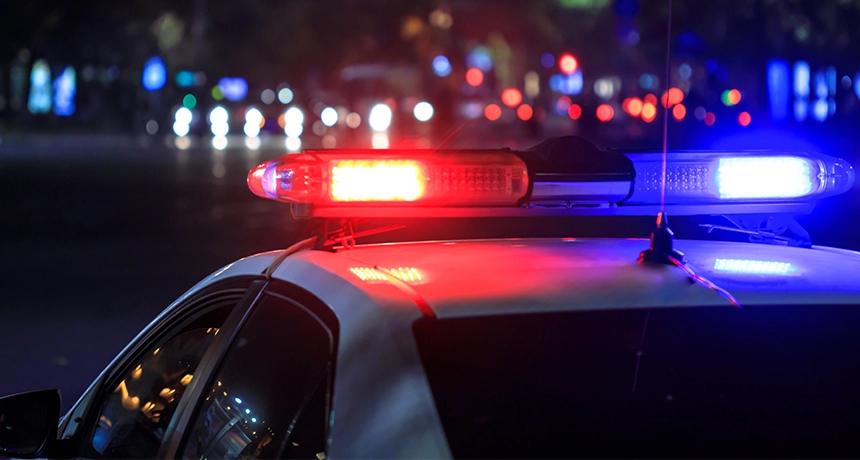
Yes, police officers are legally allowed to chase motorcyclists who fail to stop when instructed, including riders not wearing helmets. However, any pursuit is carefully assessed based on public safety, road conditions, and the level of risk involved.
Is it necessary to buy expensive gear?
It’s not necessary to buy expensive gear; while premium motorcycle gear often includes advanced materials, extra comfort features, and enhanced weather protection, many affordable options still provide excellent safety. The key is to choose CE-approved gear that fits properly and suits your riding style.
When should you replace your motorcycle gear?
Motorcycle gear should be replaced if it has been damaged in a crash, shows significant wear and tear, or no longer fits correctly. Helmets generally should be replaced every five to seven years, depending on manufacturer guidance and how frequently they’re used.
Should you buy insurance for your motorbike gear?
Motorbike gear can be expensive to replace, especially after theft or an accident. Specialist motorcycle insurance policies or add-ons may provide cover for helmets, leathers, gloves, and other riding equipment.
The Last Stop!
That completes our blog on motorcycle gear laws. We hope you’ve learnt a thing or two and are ready to choose your motorcycle gear! If you are in need of motorbike insurance or even helmet & leathers insurance, you can get a quote directly with Lexham!